
What to Look for in a Whey Protein Powder (A Dietitian’s Honest Guide)
If I had a dollar for every time someone asked me what protein powder I recommend, I’d be a very rich dietitian.
Here’s my honest answer: it depends.

I know that’s not what you were hoping for. But as a registered dietitian, I’d be doing you a disservice if I handed you a single answer without any context. The protein powder that works for a 28-year-old training five days a week may look different from what I’d recommend to a busy mom trying to hit her protein goals between school pickup and dinner. Nutrition is nuanced, and this category is no exception.
That said, I do have go-to recommendations, brands I’ve vetted, trust, and actually suggest to my clients (and use myself). And after years of getting this question, I figured it was time to write it all down in one place.
In this post I’m breaking down exactly what to look for in a whey protein powder, the red flags that make me put something back on the shelf, and the specific brands that make my short list, plus a few alternatives if whey isn’t the right fit for you.
Do You Actually Need a Protein Powder?
Honest answer: probably not in the way you think.
Whole foods will always be my first recommendation. Eggs, Greek yogurt, cottage cheese, chicken, fish, legumes, etc as these come packaged with nutrients that a powder simply can’t replicate. If you’re hitting your protein needs through food, a supplement isn’t going to move the needle much.
But real life is messy. There are days when getting enough protein through food alone just isn’t happening, and that’s exactly where a quality protein powder earns its place. For busy people, athletes with higher demands, moms or anyone who struggles to hit their protein goals consistently, a good powder can be a genuinely useful tool. I use them with clients all the time, stirred into coffee, blended into smoothies, mixed into oats or overnight oats. It’s one of the easiest ways to quietly boost protein without overhauling how you eat.
So rather than asking “should I take protein powder,” a better question is: where are the gaps in my diet, and is this the most practical way to fill them?
If the answer is yes, keep reading. Let’s make sure you’re choosing the right one.
What to Look for on the Label
This is where most people get lost, and I get it. Supplement labels are a lot, and not every brand makes them easy to navigate. Once you know what to look for though, it gets much simpler. Here’s what I actually pay attention to when evaluating a protein powder.
Protein source
For whey specifically, you’ll usually see one of three forms: concentrate, isolate, or hydrolysate.
Whey concentrate is the least processed and typically the most affordable option. It contains a bit more fat, carbohydrates, and lactose than other forms, but still provides a high-quality source of protein.
Whey isolate is more refined, resulting in a higher percentage of protein per serving and very little lactose. This can make it a better choice for people who are lactose-sensitive or looking for a leaner protein source.
Whey hydrolysate is partially broken down (hydrolyzed), which may allow for slightly faster digestion and absorption. However, it’s typically more expensive, can have a more bitter taste, and doesn’t appear to offer meaningful benefits over isolate or concentrate for most people focused on general health, fitness, or muscle building.
Grass-fed vs conventional
Where the cows come from matters. Grass-fed dairy has a better fatty acid profile compared to conventional, and the farming practices tend to be more transparent. It’s not a dealbreaker if a brand isn’t grass-fed, but it’s a detail worth noting when comparing options.
Ingredient list length
Shorter is generally better. A quality protein powder doesn’t need a lot of extras. If you’re scanning a label and don’t recognize half the ingredients, that’s worth paying attention to.
Third-party testing
This one is non-negotiable for me. The supplement industry is not tightly regulated, which means what’s on the label isn’t always what’s in the product. Third-party certifications like NSF Certified for Sport or Informed Sport tell you that an independent organization has verified the product for accuracy and screened it for contaminants. If a brand isn’t third-party tested, I move on.
Sweeteners and additives
Many protein powders are sweetened with artificial sweeteners like sucralose or acesulfame potassium. Some people tolerate these fine, others don’t. I generally prefer powders sweetened with more natural options like stevia, monk fruit, or coconut sugar. That said, stevia and monk fruit can leave a noticeable aftertaste for some people, so if you’ve tried a protein powder and found the flavor off-putting, the sweetener is often why. Taste and mixability matter more than people give them credit for. The best protein powder is the one you’ll actually use consistently, and that has a lot to do with whether you enjoy drinking it. Also watch for fillers, gums, and artificial flavors, none of which are adding anything useful to your product.
Red Flags to Watch Out For
Just as important as knowing what to look for is knowing what to avoid. A few things that make me put a protein powder back on the shelf:
A very long ingredient list
A good protein powder doesn’t need much. If the ingredient list is running long with things you can’t pronounce or wouldn’t recognize in a grocery store, that’s a signal the product is more about marketing than quality.
Proprietary blends
If a label lists a “performance blend” or “recovery matrix” without telling you exactly how much of each ingredient is included, that’s a red flag. You deserve to know what you’re putting in your body and in what amounts. Not to mention a lot of times companies will make a claim about a product based on levels of an ingredient in their product that doesn’t reach the levels found in research.
Misleading serving sizes
Some brands manipulate serving sizes to make their protein content look more impressive than it is. Always check how many grams the serving size is and how much of that is actually protein. A 60g scoop delivering 25g of protein tells a different story than a 30g scoop doing the same.
No third-party testing
Worth repeating here. No certification means no independent verification. In an unregulated industry, that’s a big ask of your trust.
Heavy metal contamination risk
This one doesn’t get talked about enough. Some protein powders, particularly plant-based ones, have tested positive for elevated levels of heavy metals like lead and arsenic. This is another reason third-party testing matters so much, it’s not just about what’s on the label but what isn’t disclosed.
Unrealistic claims
If a protein powder is promising fat loss, muscle gain, or any specific health outcome on the label, that’s a marketing claim, not a nutrition fact. A good protein powder does one thing well: delivers quality protein. The rest is up to you and how you use it.
Why Grass-Fed Sourcing Matters
Now that you know what to avoid, here’s one sourcing detail worth actively looking for.
Not all whey is created equal, and sourcing is a big part of why.
Whey protein comes from milk, which means the quality of that milk directly affects the quality of your protein powder. Grass-fed cows tend to produce milk with a better fatty acid profile, including higher levels of omega-3 fatty acids and conjugated linoleic acid (CLA) compared to conventional dairy. These aren’t present in huge amounts in a protein powder, but it speaks to the overall quality and integrity of the ingredient.
Beyond nutrition, grass-fed sourcing usually signals something about how a brand operates. Companies that prioritize where their ingredients come from tend to care more about the full picture, including manufacturing practices, transparency, and what ends up on the label.
It’s also worth noting that “grass-fed” isn’t a tightly regulated term, so it’s worth looking for brands that are specific about their sourcing rather than just using it as a buzzword. Where are the cows from? Are they grass-fed and finished, or just grass-fed at some point? The more transparent a brand is about this, the better.
Grass-fed isn’t the only thing that matters when choosing a whey protein, but when you combine it with a short ingredient list, natural sweeteners, and third-party testing, it starts to paint a pretty clear picture of a quality product.
The Whey Protein Powders I Actually Recommend
I want to be transparent here: this post was created in partnership with Naked Nutrition. That said, I would not recommend a product I don’t genuinely stand behind, and everything I’ve outlined above is exactly how I evaluate any brand before suggesting it to my clients. Every product on this list is something I have personally tried, would consume myself, and recommend to my clients.
Naked Whey

Naked Nutrition’s grass-fed whey is one of the simplest products on the market, and that’s exactly why I like it. The unflavored version has one ingredient: whey protein concentrate from grass-fed cows. No fillers, no artificial sweeteners, no fluff. It mixes well, works great when stirred into oats or blended into smoothies, and the flavor is neutral enough that it doesn’t compete with whatever you’re adding it to. I was recently gifted their vanilla flavor and it’s become a favorite too. It’s sweetened with coconut sugar, which I appreciate since I’m not a huge fan of the aftertaste you can get with stevia. Subtle, not overly sweet, and exactly what I want. If you’re someone who wants to know exactly what you’re putting in your body, this is a really solid option.
Puori
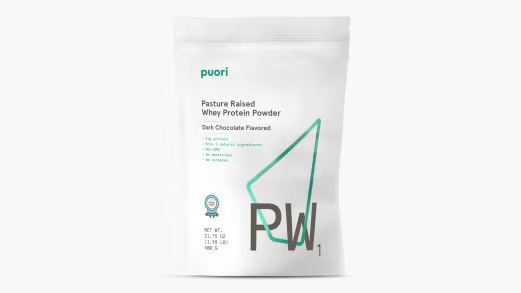
Puori is one I’ve recommended for a long time and will continue to. Their whey is third-party tested, uses minimal ingredients, and is sweetened with coconut sugar, which gives it a naturally mild and pleasant flavor without any of the aftertaste you can sometimes get with stevia or monk fruit. My personal favorites are the Bourbon Vanilla and Dark Chocolate. Both are really good and neither tastes like a supplement, which is a win.
Legion

Legion is transparent in a way that not many supplement brands are. They publish the full research behind their formulations and use clinically studied doses, which as an RD I really appreciate. Their whey isolate is clean, well-sourced, and a great option for anyone who wants a higher protein per serving with very low lactose. Fair warning though, their flavor game is strong and you may have a hard time choosing. My personal favorites are Chocolate Peanut Butter, Birthday Cake, and Cinnamon Cereal.
Momentous

Momentous is my go-to recommendation for athletes or anyone who needs the highest level of third-party verification. It carries both NSF Certified for Sport and Informed Sport certifications, putting it in a small category of brands that meet sport-specific testing standards. It’s sourced from European grass-fed dairy and contains no artificial sweeteners, gums, or fillers. I’ve tried the vanilla and it’s clean and mild, exactly what you’d expect from a brand this serious about quality.
Ascent

Ascent is a great option if you want something widely available without compromising on quality. They use native whey, which is less processed than standard whey, and their products are Informed Sport certified, rBST and rBGH free, and free from artificial flavors and sweeteners. It’s also one of the more accessible options price-wise, which I appreciate for clients who need something they can actually sustain long term. I’ve tried the chocolate and it’s a solid, no-fuss flavor that mixes well.
SFH (Stronger Faster Healthier)

SFH is one I recommend when sourcing is a top priority. Their whey is sourced from grass-fed cows in New Zealand, one of the only places in the world where cows can graze on pasture year-round. No growth hormones, no artificial additives, and NSF Certified for Sport. I’ve tried both the vanilla and chocolate and honestly both are great, especially for a brand that keeps the ingredient list so clean. It’s a smaller brand but one that really walks the talk when it comes to transparency and quality.
But Whey Isn’t Your Only Option
Whey is my most recommended protein powder and for good reason. It’s well-researched, highly bioavailable, and versatile. But it’s not the right fit for everyone, and I think it’s worth knowing what else is out there.
Casein protein
Also derived from dairy, casein digests much more slowly than whey. This makes it a popular option before bed since your body is essentially getting a slower, steadier release of amino acids overnight. If you’re someone who struggles to hit protein goals throughout the day, a casein shake in the evening can be a practical way to close that gap.
Egg white protein
A great option for people who want to or need to avoid dairy but still prefer an animal-based protein source. Egg white protein is highly bioavailable and has a complete amino acid profile. It tends to be a bit more neutral in flavor, which makes it easy to add to recipes.
Collagen protein
This one comes up a lot and I want to be clear: collagen is not a complete protein. It’s missing several essential amino acids, which means it shouldn’t be your primary protein source. That said, it does have a place, particularly for supporting joint, skin, and connective tissue health. Just don’t rely on it as a substitute for a complete protein powder.
Plant-based protein
For those who are vegan, lactose intolerant, or simply prefer to avoid animal products, plant-based protein powders have come a long way. Pea protein is currently the most well-researched plant option and has a decent amino acid profile. The key with plant-based powders is to look for a blend of protein sources, like pea and rice combined, since this gives you a more complete amino acid profile than a single source alone. The same rules apply here as with whey: short ingredient list, third-party tested, and no unnecessary additives. Also worth noting that plant-based powders tend to carry a higher risk of heavy metal contamination, which makes third-party testing even more important in this category.
Special Note: Naked Nutrition actually carries versions of several of these, including casein, egg white, collagen and plant-based options, so if you find a brand you trust it can be worth sticking with them across the board.
How to Actually Use Protein Powder
Once you’ve found a protein powder you like, the next question I get is how and when to use it. Here’s my practical take.
How much do you actually need?
This varies a lot depending on your goals, activity level, and overall health. A general starting point for most active adults is around 1.2 to 1.6 grams of protein per kilogram of bodyweight per day, and sometimes more depending on your health and goals. If you’re consistently falling short of that through food alone, that’s where a protein powder can help fill the gap. Remember, it’s a supplement, meaning it works alongside your diet, not instead of it.
Timing
The research on protein timing is a lot less rigid than the fitness industry would have you believe. The old rule of chugging a shake within 30 minutes of a workout has largely been debunked. What matters more is total daily protein intake spread reasonably throughout the day. That said, getting protein in within a couple of hours post-workout is still a sensible practice, especially if you’re training hard and trying to support muscle recovery.
How I actually use it with clients
Protein powder doesn’t have to mean a shake. Some of my favorite ways to use it with clients include stirring it into coffee, mixing it into oats or overnight oats, blending it into smoothies, or even adding it to yogurt or baked goods. The goal is to make it easy and sustainable, because the best protein powder is the one you’ll actually use consistently.
A note on quantity
More is not always better. One to two servings a day is plenty for most people, but as with everything in nutrition, it depends. If you’re unsure how much protein you actually need, that’s a great conversation to have with a registered dietitian who can look at your full picture.
The Bottom Line
Choosing a protein powder doesn’t have to be overwhelming once you know what to look for. Keep the ingredient list short, prioritize third-party testing, pay attention to sourcing, and find something that actually tastes good to you because consistency matters more than finding the “perfect” option.
If you’re looking for a place to start, Naked Whey is one I genuinely recommend. It’s simple, transparent, and versatile enough to work for almost anyone. You can find it here.
And if whey isn’t the right fit for you, that’s okay too. There are good options across every protein type, and the best one is always the one that works for your body, your goals, and your real life.
As always, if you want personalized guidance on your protein needs or overall nutrition, that’s exactly what I’m here for. You can learn more about working with me one on one here.
This post was created in partnership with Naked Nutrition. All opinions are my own and I only recommend products I personally use and trust. #ad